
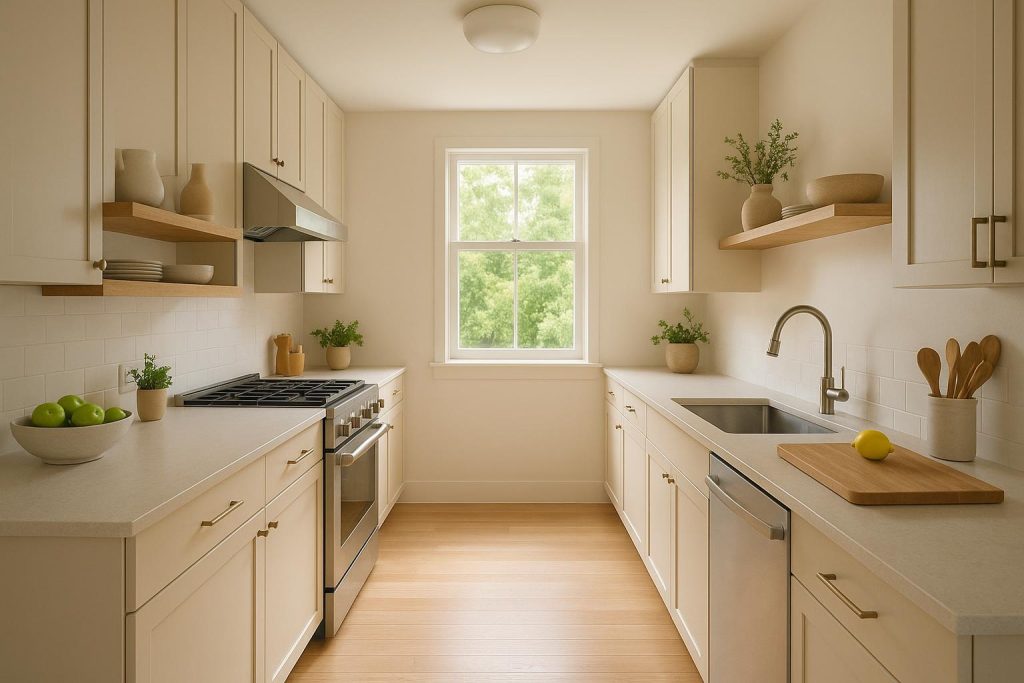
Maximizing Efficiency in a Narrow Galley Kitchen: Practical Tips and Creative Ideas
A narrow galley kitchen can present unique challenges when it comes to making the most of your available cooking and prep space. Between cramped walkways and limited surfaces, the process of storing cookware and moving around can feel restrictive. However, with some smart planning and strategic design decisions, you can increase your kitchen’s functionality without sacrificing comfort or style. Below, we’ll explore tips and suggestions for arranging your appliances, optimizing storage, brightening up the space, and bringing a cohesive aesthetic to every square inch of your galley kitchen.
1. Understand the Flow of Your Kitchen
The first step in creating an efficient galley kitchen is to evaluate how you naturally work in the space. Notice where you tend to chop, where your most-used appliances live, and if there’s any bottleneck that disrupts your cooking activities. By mapping out your movements, you can set up the classic “kitchen triangle”—the distance between your sink, refrigerator, and stove—in a way that allows you to move with minimal backtracking. For instance, if you prefer to do most of your prep work near the sink, ensuring adequate counter space on that side saves you from unnecessary steps.
When choosing placements for key features, keep in mind that your primary tasks—washing produce, chopping, cooking, and plating—should flow naturally. If you can, position your refrigerator at one end of the kitchen and your stove at the other. This arrangement often helps to reduce congestion in the middle of the space, letting you transition easily between different tasks.
2. Make the Most of Vertical Storage
Storage is crucial in a galley kitchen, particularly one with narrow walkways. To gain more square footage for food prep, look upward. Instead of standard cabinets that stop at the top of your walls, extend them up to the ceiling if possible. Tall, floor-to-ceiling cabinetry can transform areas that often remain out of reach into valuable storage for seasonal or less frequently used items. If you’re worried about a claustrophobic feel, consider a mix of closed cabinetry and open shelving, balanced in a way that visually opens up the room while hiding clutter.
Cabinet door organizers and pull-out drawers are two essential additions. Installing organizers on the back of cabinet doors gives you easy access to items like spices, cutting boards, or utensils without gobbling up space in the main cabinet area. Likewise, pull-out drawers beneath countertops help utilize the full depth of cabinets and let you reach items at the back without rummaging.
3. Organize with Pull-Out Pantries
A pull-out pantry can be a game-changer in a narrow environment. By installing a slim, movable shelf system, you can neatly store cans, jars, dried goods, and other frequently used staples in a compact but accessible format. When you slide the pantry out, everything is accessible without requiring wide areas for swinging doors. This is particularly helpful if you’ve set up your galley kitchen so that one side is mostly cabinetry, which can feel overwhelming if every door opens out into the central walkway.
4. Keep the Pathway Clear
It’s easy for narrow kitchens to become congested with small appliances, decorative objects, or simply too much furniture. Whenever possible, minimize what occupies your countertops. While a favorite coffee machine may deserve a permanent spot, storing other infrequently used gadgets out of sight helps maintain a more spacious feel. Keep dish racks, small trash bins, and other workflow items off the floor and well-integrated within your cabinetry, preserving as much open walkway as you can.
For the same reason, avoid placing large furniture pieces directly opposite one another. Even if your galley kitchen opens up on one end, a wide freestanding cabinet or bulky dining table could choke the flow from one area to the next. Think narrow, minimal, and above all, functional when selecting any piece to occupy the central passage.
5. Brighten with Smart Lighting
Lighting can have a dramatic impact on how roomy your galley kitchen feels. Instead of relying on a single ceiling fixture, explore layers of lighting. A combination of overhead lights, under-cabinet task lighting, and pendant lamps can illuminate every corner, giving you better visibility and visually opening the space. The underside of cabinets is especially valuable real estate for lighting, as it prevents countertops from falling into shadow, making meal prep safer and clearer.
Also, consider adding sconces or even decorative wall fixtures at strategic points, like near the sink or cooking station, to give the room a dynamic glow. A bright, cheerful environment not only makes cooking more enjoyable but also helps reflect light off surfaces—further enhancing a sense of spaciousness.
6. Incorporate Light and Reflective Surfaces
In a narrow kitchen, color and material choices can visually expand the space. Lighter hues on cabinets, countertops, and walls help bounce light around, creating an airy ambiance. White or pale gray cabinetry can provide a sense of calm and openness, but so can lighter wood tones or pastel shades if you want a softer look. High-gloss finishes and reflective materials like glass tile backsplashes amplify whatever light is present, making the entire kitchen appear larger.
If fully mirrored surfaces feel too bold, consider using smaller accents instead. For instance, a mirrored backsplash behind the stove or along one wall can add contemporary flair without completely overtaking the design. The reflection gives an illusion of depth, a trick that’s especially beneficial in a narrow layout.
7. Opt for Space-Saving Doors
Traditional swinging doors can occupy a good chunk of space when opened. In a narrow galley kitchen, such doors may block the flow between the cooking area and adjacent rooms. Switching to pocket doors or barn-style sliding doors can help recapture those precious inches. Pocket doors slide discreetly into the wall, while barn doors glide effortlessly along a rail. Both solutions free up space around your entrances, reducing accidental bumps and making traffic through the kitchen smoother.
8. Choose the Right Appliances
While large double-door refrigerators or oversized ovens may look impressive, they might not be practical in a smaller galley. If you’re renovating your kitchen, consider compact appliances specifically designed for tight spaces. Slim-profile refrigerators, narrow dishwashers, or a microwave-oven combo can help you save feet of clearance—a gift in any confined environment.
Aiming for a built-in look can further streamline your arrangement. When appliances fit flush with your cabinetry, it reduces visual fragmentation and promotes a consistent, efficient layout. Even smaller appliances—like coffee makers or toaster ovens—can be recessed into dedicated shelves or cabinets, helping clear the counters and minimize clutter.
9. Design Around Your Personal Style
Even if square footage is limited, there’s still room for personal touches. Whether you favor modern minimalism with sleek lines and neutral tones or a warm farmhouse style with rustic details, let your taste guide the design. Choosing a cohesive color scheme and consistent cabinet hardware can bring harmony to a narrow layout that might otherwise feel disjointed.
To elevate the design, experiment with accent pieces that don’t compromise space. A small sculptural light fixture, a bold tile pattern along the backsplash, or attractive bar pulls on your cabinets can all make strong style statements without intruding into the walkway.
10. Keep Frequently Used Items Accessible
One of the fastest ways to add frustration to a narrow kitchen is to have to constantly rummage for frequently used items. Group your everyday utensils, plates, cups, and cookware in the most accessible cabinets or drawers. This way, you aren’t traveling too far around your kitchen every time you need a spatula or a fresh mug.
If you love to cook and keep an array of spices on hand, consider a pull-out spice rack near the stove, or a small shelf displaying your favorite flavors within arm’s reach. Functional organization ensures that cooking remains smooth, helping you fully enjoy your mealtimes without the annoyance of constant rearranging.
11. Don’t Forget About Maintenance
In a narrow galley kitchen, even small messes can seem amplified. Clean as you go to keep surfaces clear and maintain the sense of openness. Wipe down counters immediately after meal prep, and regularly toss out items from the fridge or pantry that are no longer needed. A quick daily reset of your workspace helps you avoid clutter buildup, ensuring you’ll continue to appreciate the design and layout you’ve purposefully created.
12. Embrace Storage Solutions in Other Areas
If there really isn’t additional storage capacity within the kitchen itself, see if adjacent spaces can help. Sometimes, adding a buffet or small shelving unit just beyond the galley can absorb overflow items like large serving platters or rarely used baking pans. This approach maintains focus in the main cooking zone, reserving it for the items you truly use on a day-to-day basis.
Maximizing room function isn’t limited to kitchens alone. If storage is a universal concern in your home, you may be interested in exploring other small-space solutions. For instance, you can learn more about creating the illusion of space in smaller bedrooms by reading How can I make a small bedroom look bigger without major construction?. And to see whether built-in cabinets might work for other areas, have a look at Is it worth installing built-ins to save space in small rooms?. You’ll discover a range of strategies that can often be adapted to any tight area.
13. Let There Be Light (and Airiness)
Galley kitchens need good ventilation, especially when cooking in close quarters. If you have windows, keep them free of heavy drapery. Opt for sheer curtains or simple blinds that let in plenty of daylight whenever possible. Sunlight naturally brightens a narrow space and keeps it from feeling too enclosed.
Lighting is not just about fixtures inside the kitchen; consider the broader atmosphere. If there’s an adjacent dining area or living room with an open-concept design, coordinate lighting schemes so the flow from one space to another feels seamless. This visual connectivity adds to the sense of roominess.
14. Explore Professional Renovation and Assistance
If you’ve reached a point where small tweaks aren’t enough, you might consider a more significant kitchen renovation. An in-house design team has the expertise to create custom cabinetry, reconfigure your layout to maximize efficiency, and even handle unique design requests specific to your cooking habits. Such a renovation approach can be especially helpful if your galley kitchen’s layout is overly rigid or if you’re ready to upgrade finishes, appliances, and structures all at once.
Professional input can also benefit other small areas in your home. If you’re curious about adding clever storage solutions in a cramped bathroom, check out What are some clever ways to add storage in a tiny bathroom?. These related resources can give you a broader perspective on maximizing every corner of your living space.
15. A Final Word on Narrow Kitchen Possibilities
A narrow galley kitchen doesn’t have to be a hindrance. By carefully analyzing your workflow, installing thoughtful storage solutions, maintaining strong lighting, and incorporating design elements that highlight light and space, you can make your oversize ambitions fit into even the most compact cooking areas. The key lies in embracing creativity and functionality in equal parts. You want your galley kitchen to inspire you to cook, entertain, and enjoy life in a setting tailor-made for your needs.
Whether you’re simply rearranging appliances or embarking on a complete renovation, remember that every decision you make—from cabinet color to door style—can have an impact on how spacious and efficient your kitchen feels. If you’d like to explore professional, design-centered renovations tailored to your preferences, take a look at our Home page. With a well-planned approach, even the narrowest galley kitchen can become a culinary haven that fits seamlessly into the rest of your home.