
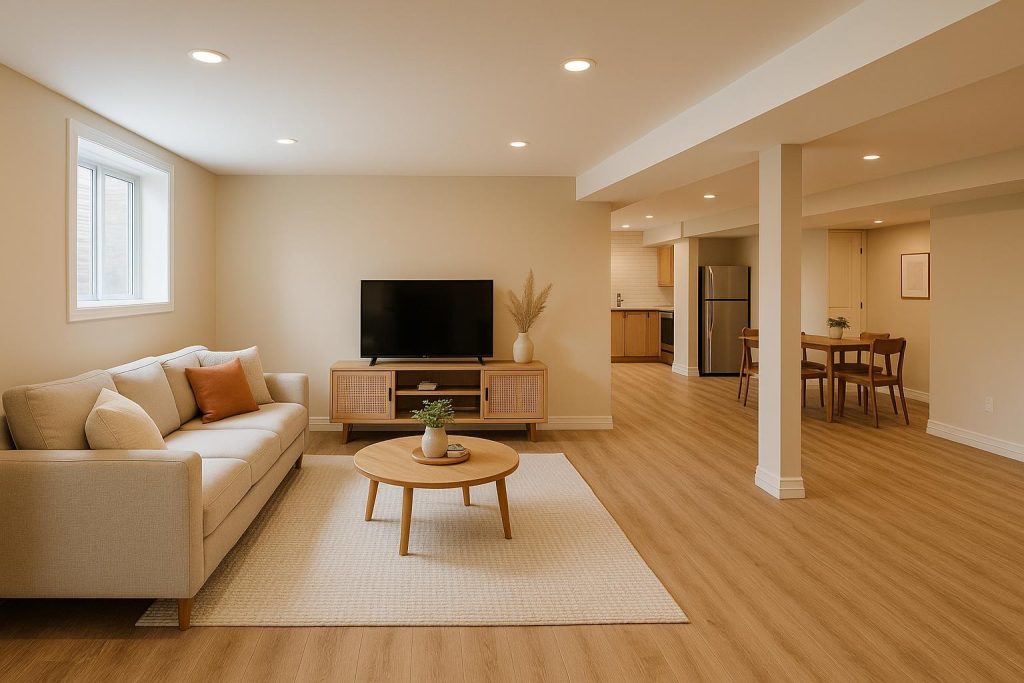
Turning Your Basement into a Legal Suite: Key Steps and Considerations
Converting an underutilized basement into a legal suite not only creates extra living space but can also provide a practical income source if you choose to rent it out. A legal suite comes with specific requirements set by provincial or municipal regulations, meaning all work must meet local building codes, safety standards, and zoning rules. Knowing these regulations ahead of time can save you from costly repairs or redoing work later. Below, you’ll find a comprehensive overview of the key considerations, from assessing feasibility to navigating permits and final inspections. The goal is to help you understand everything that goes into transforming your basement into a comfortable, code-compliant living space.
1. Establishing Feasibility
Before embarking on a basement conversion, it’s wise to see if your basement space is suitable for a legal suite. Consider the following:
- Ceiling Height: Most regions require a minimum ceiling height—commonly around 6.5 to 7 feet—to ensure a safe and comfortable living environment.
- Existing Structure: Take note of foundation issues, water damage, or structural integrity concerns. Addressing these early prevents more significant problems during construction.
- Layout and Access: A separate entrance is usually required for legal suites. If your basement lacks a direct exterior entry point, you’ll need to factor in the cost and logistics of adding one.
If these initial checks indicate your space could work as a suite, you can move forward with more detailed planning.
2. Understanding Zoning and Permits
Every municipality has unique zoning regulations around secondary suites. In many cities, basement suites are permitted in specific residential zones, but you will still need official approval from the local planning and development department. Key permits often include:
- Development Permit: Confirms that your planned suite meets both zoning and land use requirements.
- Building Permit: Ensures alignment with safety and structural codes. This covers everything from fire safety to mechanical, electrical, and plumbing systems.
- Plumbing and Electrical Permits: If you’re installing new plumbing lines or upgrading the electrical system, specialized permits will be required.
The permit application process commonly involves submitting floor plans, details on the proposed changes, and information about the property’s layout. Local authorities will review your plans to confirm all regulations are met. If approved, you’ll receive the permits you need to continue.
3. Budgeting for the Project
Budgeting for a basement conversion is more complex than just factoring in drywall and flooring. Because you’re creating a code-compliant living area, be prepared to invest in:
- Structural Modifications: Adding or enlarging windows for egress, building a separate entrance, or shoring up foundation walls may all be necessary.
- Mechanical Upgrades: HVAC upgrades, separate temperature controls, and improved ventilation systems ensure a comfortable environment for occupants.
- Plumbing and Electrical Work: Kitchens and bathrooms require specialized plumbing, and the suite should have safe and reliable electrical wiring.
- Soundproofing: This can be crucial for privacy, especially if you plan to rent the basement to a tenant while you occupy the main levels.
- Finishes and Amenities: Flooring, cabinetry, and appliances provide the comfort and appearance that make a suite welcoming and functional.
It’s wise to build a contingency fund into your budget, typically around 10% to 15% of the total cost, to cover unexpected issues. This not only prevents stress but also keeps the project moving forward smoothly.
4. Designing the Suite Layout
A well-thought-out layout significantly improves both the practicality and appeal of the finished space. Here are some design components to consider:
- Efficient Kitchen Setup: A functional kitchen typically includes a sink, fridge, stove or cooktop, and ample storage. Consider adding an exhaust fan or hood vent for proper air circulation.
- Bathroom Placement: Basement bathrooms commonly share plumbing lines with existing facilities, which can save on installation costs. However, you still need to ensure that drainage and venting are up to code.
- Open-Concept vs. Segmented Layouts: An open-concept design can maximize space, but some occupants prefer separate areas for dining, living, and sleeping.
- Natural Light: Egress windows or enlarged existing windows not only satisfy safety requirements but also bring much-needed light into the basement. This helps the suite feel more inviting and less like a cellar.
If you’re unsure about configuration or maximizing the available space, working with a design-centered renovation contractor can make the process smoother. By examining traffic flow, storage solutions, and occupant comfort, you can turn a dark, cramped basement into a bright, welcoming home.
5. Structural Upgrades and Egress
Fire and building codes place a high priority on safe exits. For a basement suite, that typically translates to:
- Egress Windows: These must meet specific size requirements to allow residents to exit quickly in an emergency.
- Doorways and Hallways: Entry routes should be free of obstructions, with minimum width requirements likely set by local regulations.
- Smoke and Carbon Monoxide Detectors: Interconnected detectors on each level of the home may be mandated by law. Always confirm if a dual-power supply (hardwired plus battery backup) is required.
Additionally, floors and walls must be fire-rated, especially where the suite meets the main dwelling. This typically involves specialized drywall or even double drywall layers to meet code for fire separation.
6. Meeting Electrical and Plumbing Standards
Renovating an existing space for habitation means you’ll likely need new or updated plumbing and electrical infrastructure. Code requirements may include:
- Dedicated Circuits: Each suite frequently has its own electrical panel or subpanel to handle the load and make future troubleshooting easier.
- Sufficient Outlets and GFCIs: Ground Fault Circuit Interrupters (GFCIs) are essential in areas prone to moisture, such as bathrooms and kitchens.
- Proper Venting for Plumbing: To prevent issues with air pressure in the drainage system, ensuring adequate venting is a must.
- Backwater Valve: Helps prevent sewage backups into the suite during heavy rain or municipal line clogs.
Before finalizing the design, consider the long-term durability of these systems. If you foresee future expansions or additional fixtures, it’s often cheaper to upgrade the capacity now than retrofit later.
7. Prioritizing Soundproofing and Comfort
Comfort is paramount for any legal suite, as a noisy or drafty environment won’t feel like home. Good soundproofing measures could include:
- Insulated Walls and Ceilings: Insulation between the floor joists can reduce noise transfer from the main residence.
- Resilient Channels or Acoustic Isolation: Installing these on walls and ceilings helps dampen vibrations.
Likewise, pay attention to ventilation and heating distribution. Nobody wants to live in a space that’s too cold, too hot, or suffers from a lack of fresh air. Properly audited HVAC and ventilation systems keep the environment pleasant.
8. Scheduling Inspections and Final Approval
Local building authorities usually require inspections at different project stages, such as:
- Rough-In Inspection: Covers framing, plumbing, electrical, and mechanical systems before walls are fully enclosed.
- Insulation Inspection: Ensures adequate insulation and vapor barriers are installed.
- Final Inspection: After the suite is complete, an inspector verifies all code requirements have been met.
Only once you have the final occupancy approval can you officially call it a legal suite.
9. Deciding Whether to Hire a Professional Contractor
While some homeowners manage basement conversions themselves, the complexity of meeting local codes—especially for mechanical, electrical, and structural work—often calls for specialized expertise. A professional renovation contractor can guide you through each phase, from the initial concept design to the final inspection. They can also help you develop a transparent budget, integrate design-focused solutions, and ensure every stage aligns with safety standards. Many homeowners find the cost of professional help a worthwhile investment for peace of mind and a high-quality result.
10. The Value of a Legal Suite
A legal basement suite opens new doors, whether you want to supplement your mortgage payments, welcome extended family for multi-generational living, or boost the overall resale value of your home. In many housing markets, prospective buyers see a properly permitted suite as an attractive feature. Crucially, should you decide to rent out the space, adhering to regulations from the start reduces the risk of fines, tenant disputes, or forced closure down the road.
Bringing It All Together
Completing a basement conversion might seem like navigating a maze of permits, design choices, and code requirements. Yet each step, from assessing feasibility to final inspection, contributes to creating a comfortable, safe, and properly registered dwelling. If you’re looking to optimize your basement’s potential in Edmonton and surrounding areas, a renovation partner with expertise in design-centered transformations can be your guide. Putting an emphasis on transparency, quality craftsmanship, and local code compliance ensures the final suite meets all legal standards and feels like an extension of your own home’s comfort and style.
If you need professional guidance, consider consulting a full-service renovation contractor to help evaluate, plan, and execute your project. By focusing on detailed planning and thoughtful design, you can achieve a newly converted basement suite that stands out for its convenience, functionality, and adherence to local regulations. Feel free to visit Awlridge Renovations to learn more about turning your renovation aspirations into reality.