
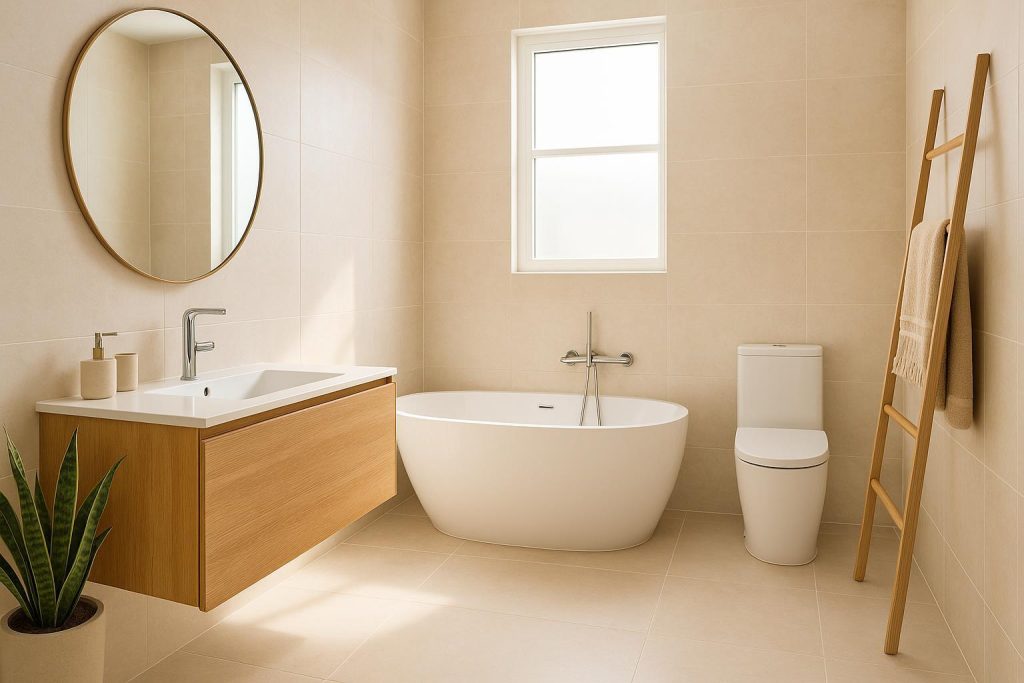
Key Considerations When Changing Your Bathroom Layout
Choosing whether to change the layout in a bathroom renovation is one of the most important decisions you can make. Not only can the layout affect how much you spend on the remodel, but it will also impact your daily routines. In some cases, you might achieve the results you want without making big changes to the design. In other instances, altering the layout might be the perfect way to get a more comfortable and functional bathroom. Below, we’ll explore key considerations like budgeting, plumbing, workflow, storage, and other practical issues that will help you decide how much of a change—if any—is right for your space.
1. Evaluating Your Current Bathroom
The first step in determining whether you need a layout change is to understand exactly what isn’t working in your existing bathroom. Ask yourself questions like:
- Is the current space too cramped? Perhaps your bathroom feels tight or claustrophobic, making it difficult to get ready in the morning.
- Are the fixtures and storage elements positioned poorly? For example, your sink might be too close to the shower door, or the toilet could be awkwardly positioned behind a half-wall. These small inconveniences can add up to an overall cramped feeling.
- Are you missing key features? Maybe you’d like a double vanity, separate tub and shower, or more storage space.
Gathering these observations will help you decide if a simple refresh—like replacing flooring, adding new fixtures, or retiling—will suffice, or if you’d benefit from new walls, reconfigured plumbing, or a complete change in where the tub, shower, sink, or toilet are placed.
2. Understanding the Scope of Layout Changes
Once you identify the issues with your existing space, it’s helpful to know the range of layout updates you can make. Changes can be minimal or extensive:
- Minor Adjustments: These might involve moving a vanity to free up more elbow room, or changing the swing of a door so it doesn’t interfere with your fixtures.
- Moderate Relocations: If your shower or tub is in a bad spot—maybe it takes up too much room near the entrance—you might decide to change its position. This usually involves re-routing plumbing lines and could add time and cost.
- Major Overhauls: This is the biggest undertaking and may include knocking down walls to create more space or relocating most fixtures for a completely new bathroom design. The complexities of structural changes and advanced plumbing or electrical adjustments can add to the scope and budget significantly.
Understanding these levels helps you decide how big or small you want your project to be. Even small moves can make a big difference to the look and function of your space.
3. Balancing Budget and Impact
Every renovation goal should align with your budget. If you’re worried about costs, opting for a layout that preserves the existing plumbing lines can save you money. Conversely, if your current bathroom layout really isn’t doing its job and you have the budget, a complete overhaul could be the best long-term investment.
Plumbing Costs: Moving the location of your sink, toilet, or shower requires trained professionals to adjust drain lines and supply lines. In many homes, these changes aren’t as simple as they may seem. So, factor in the cost of extra labor and materials if you’re rearranging fixtures.
Electrical Upgrades: A new layout may also mean wiring for new lighting, exhaust fans, or adding power outlets for things like heated floors or a modern vanity mirror. Make sure to plan for these details from the start so you don’t face surprises later.
Return on Investment: If you plan to stay in your home for years, prioritizing the perfect layout that meets your exact needs can pay off in quality of life. Even so, a thoughtfully designed bathroom can also improve property value. In many real estate markets, a fully renovated bathroom is often a major selling point.
4. Improving Workflow and Functionality
One of the biggest reasons to change a bathroom layout is functionality. In a well-planned renovation, each fixture and storage solution works together seamlessly. Common layout flaws include vanities and toilets placed too close together, a door that blocks someone at the sink when opened, or a cramped shower area. Think about your daily routine and how the space could be adapted to reflect your habits:
- Do you share the bathroom? If so, adding a second sink or separate vanity areas might reduce morning conflicts.
- Are you looking for a spa-like experience? Perhaps a large tub-and-shower combo or separate walk-in shower with a bench will enhance relaxation.
- Do you need accessibility features? An aging-in-place approach might call for a curbless shower, grab bars, and wider doorways, which could require some layout adjustments to fit code requirements.
- Do you need more storage? Reconfiguring the space could allow room for a large linen closet, custom cabinets, or built-in shelves.
All of these points inform whether modest changes or a total reconfiguration are the best solution. Even subtle shifts in fixture placement can translate into a significantly more functional space.
5. Considering Structural Limitations
Bathrooms are often positioned strategically in a home. Walls may be load-bearing, which adds complexity to layout changes if you want to remove or shift them. Additionally, the ceiling heights, the location of windows, and even factors like roof slope (for second-floor bathrooms) can affect how far you can take a layout change without incurring extensive costs. It’s wise to consult a professional renovation expert to assess the structural feasibility of major moves, ensuring you don’t unintentionally weaken your home or face large unanticipated expenses.
6. Matching Your Aesthetic Vision
Sometimes, the driver for a layout change is purely aesthetic. You might want a centerpiece freestanding tub to create a statement, or prefer a bigger shower with glass doors as the visual focal point. If you have a specific look in mind—say, a sleek, minimalistic bathroom with plenty of open floor space—transforming the layout might be the only way to achieve it. Carefully consider how your visual goals match the existing space to determine if major changes are truly necessary.
7. Planning for the Future
Even if your family or budget is stable now, consider how your needs might evolve over the next few years. A newly married couple might anticipate kids in the near future, meaning a tub for toddlers might become a priority. Empty nesters might consider any mobility modifications they’ll need as they age. If you foresee significant lifestyle changes on the horizon, more extensive renovations that include layout alterations can help you avoid the need for another major remodel down the line.
8. Consulting With Design Professionals
Because of the complexity of plumbing and structural work, it’s often helpful to consult design professionals when deciding whether to change the bathroom layout. An in-house design team or professional bathroom remodeler can provide valuable insights on the feasibility, cost, and timeframe for your project. Some professionals use 3D rendering tools to help you visualize different layout possibilities in a realistic format before you commit, which reduces stress and limits the potential for regrets.
9. Balancing Project Timeline and Disruption
When you opt to change the layout dramatically, you should expect a longer timeline. Sometimes, a cosmetic or low-impact renovation can finish faster, giving you less downtime without a functioning bathroom. Larger overhauls that require demolishing walls or redoing plumbing can keep the space under construction for weeks or longer, depending on the scope. If you can’t comfortably live without your main bathroom for that time, planning a transitional space or scheduling the work around an alternative bathroom might be critical.
10. Adding Value With Thoughtful Enhancements
Whether you stick to the current layout or decide on a big change, there are many ways to add real value to your bathroom:
- Better Lighting: Incorporate overhead lights, vanity lighting, or even dimmers for a more luxurious ambience.
- Efficient Ventilation: A high-quality exhaust fan reduces humidity and prevents mold, prolonging the lifespan of your finishes.
- Modern Fixtures and Finishes: Upgrading faucets, showerheads, and surfaces to water-efficient and stylish options can elevate both function and style.
- Smart Storage Solutions: Built-in shelving, floating vanities, or pull-out organizers maximize space and keep clutter under control.
If your goal is a comfortable, spa-inspired bathroom, these features can often be achieved with minimal layout changes. However, if the existing blueprint makes it impossible or impractical to add these features, that’s a strong indicator you may benefit from a layout redesign.
11. When a Layout Change Becomes Essential
There are scenarios in which you might not have a choice about altering the bathroom layout. For example, severe water damage under a tub or behind walls could require more extensive demolition, providing the perfect opportunity to shift your fixtures for a better flow. Likewise, code violations or safety concerns could demand a new fixture arrangement. Be open to expert advice about crucial structural or plumbing updates, as the cost of ignoring these can be higher in the long run.
12. Making Your Final Decision
In many cases, the decision to change your bathroom layout boils down to whether it will make a significant difference to your comfort, your home’s value, and your overall satisfaction with the renovation. If smaller updates—like new counters, tiling, or a fresh coat of paint—can address your frustrations, then a radical redesign may not be necessary. On the other hand, if your bathroom simply doesn’t work for your daily routine or lacks sufficient storage, it may be time for a completely new layout.
It’s typically a good idea to gather multiple opinions or quotes before committing to a major change. A second opinion might confirm whether your ideas are realistic or point you to alternative solutions, such as a partial reconfiguration or a different approach to your room’s storage and fixture placement.
13. Taking the Next Step
Once you’ve determined the scope of your bathroom remodel—whether it’s preserving the current layout or overhauling it entirely—start discussing the specifics with a renovation professional. If you decide a layout change is right for you, a design team can help shape that vision and finalize the details. In addition, thoughtful research and planning on your part will enable you to:
- Set a realistic budget and timeline.
- Identify the essential features you can’t live without.
- Prioritize finishing touches that suit your style and needs.
- Avoid potential pitfalls by anticipating structural or code-related challenges.
14. Conclusion: Finding the Balance
In the end, deciding whether or not to change your bathroom layout isn’t always straightforward. It depends on your current setup, your goals, and your future plans. For many homeowners, a subtle reconfiguration—such as shifting a vanity or removing a small wall—can bring significant improvements without blowing the budget or extending project timelines excessively. In other cases, going all-in on a major renovation might be the best option to achieve a bathroom that truly meets your needs for years to come.
When the time comes to plan your bathroom renovation, gather inspiration, and talk to professionals about solutions that suit your home’s structure and your personal taste. With careful planning, you can enjoy a space that not only looks great but also feels like a well-integrated part of your daily routine. If you’re ready to take the plunge, you can explore more ideas or schedule a consultation to discuss how to best transform your bathroom into a sanctuary that balances function and style.